
IoT systems
The whole chain from sensor to cloud. The weakest link sets the performance of the system, which is why the links are designed together rather than one at a time.
The chain
Each decision constrains the ones after it. The radio sets the power budget, the power budget sets the battery, the battery sets the enclosure — and the enclosure is usually fixed before anything else.
Sensor and endpoint
What gets measured, how often, the sleep and wake pattern, the power budget. On a battery device, life is set less by the processor than by how often it wakes up.
Radio and gateway
Range, obstructions, device density and access to infrastructure. Can a gateway be installed, or does every device have to speak for itself?
Data and interface
Transport over MQTT, time-series storage, threshold and alarm logic, dashboard. Keeping field devices updatable belongs to this layer too.
Choosing the radio
The most expensive mistake in an IoT project is picking the radio out of habit. The table below shows the axes the decision actually turns on; the right answer changes with the site.
| Technology | Range | Power | Infrastructure | Where it fits |
|---|---|---|---|---|
| BLE | 10–100 m | Very low | Phone or gateway | Short range, battery sensors lasting months; useful when commissioning happens through a phone. |
| Wi-Fi | Indoor | High | Existing network | Mains-powered devices with relatively high data rates. Rarely the right call on battery. |
| LoRa | Kilometres | Very low | Your own gateway | Wide sites, small and infrequent payloads. No running cost once the gateway is yours. |
| Cellular (NB-IoT / LTE-M) | Operator coverage | Medium | Subscription | Scattered sites where no gateway can be installed. Per-device subscription cost has to be in the model. |
Two things get skipped often. Range is not a number, it is a function of the environment — concrete, metal and water make the datasheet figure meaningless. And on cellular the real cost is not the hardware but the monthly subscription per device; across a thousand units that line item overtakes the hardware.
Built examples
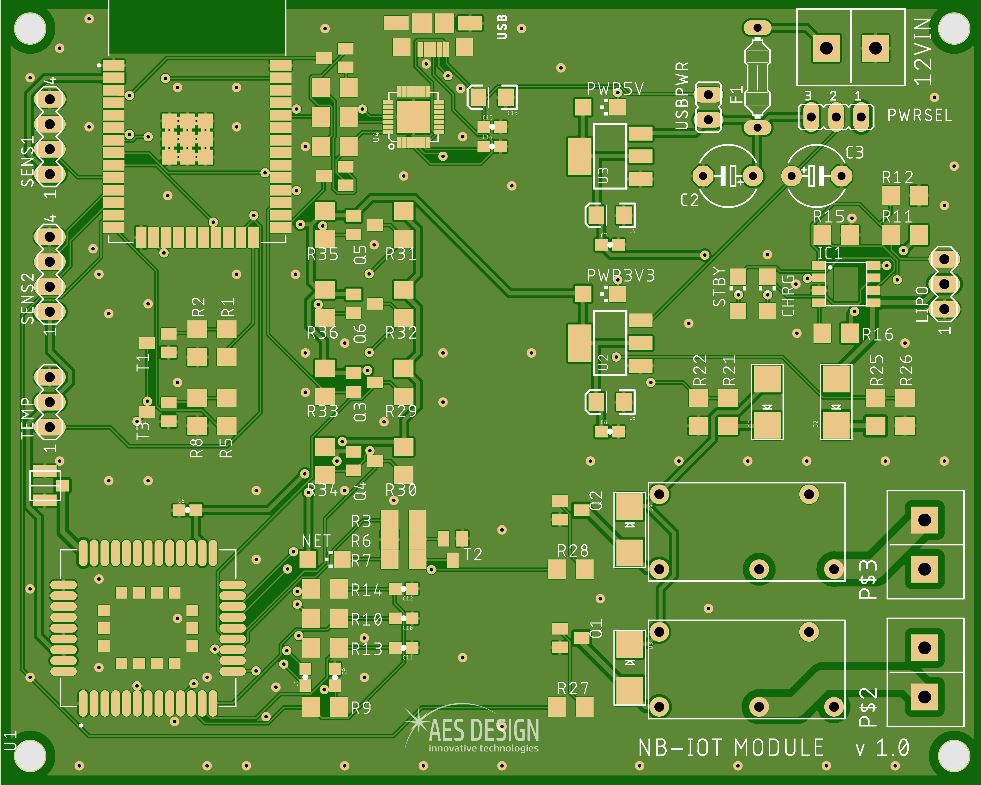
NB-IoT module, two sensor inputs and a temperature input, LiPo charging stage, 12 V supply and relay outputs. For sites where no gateway can be installed.
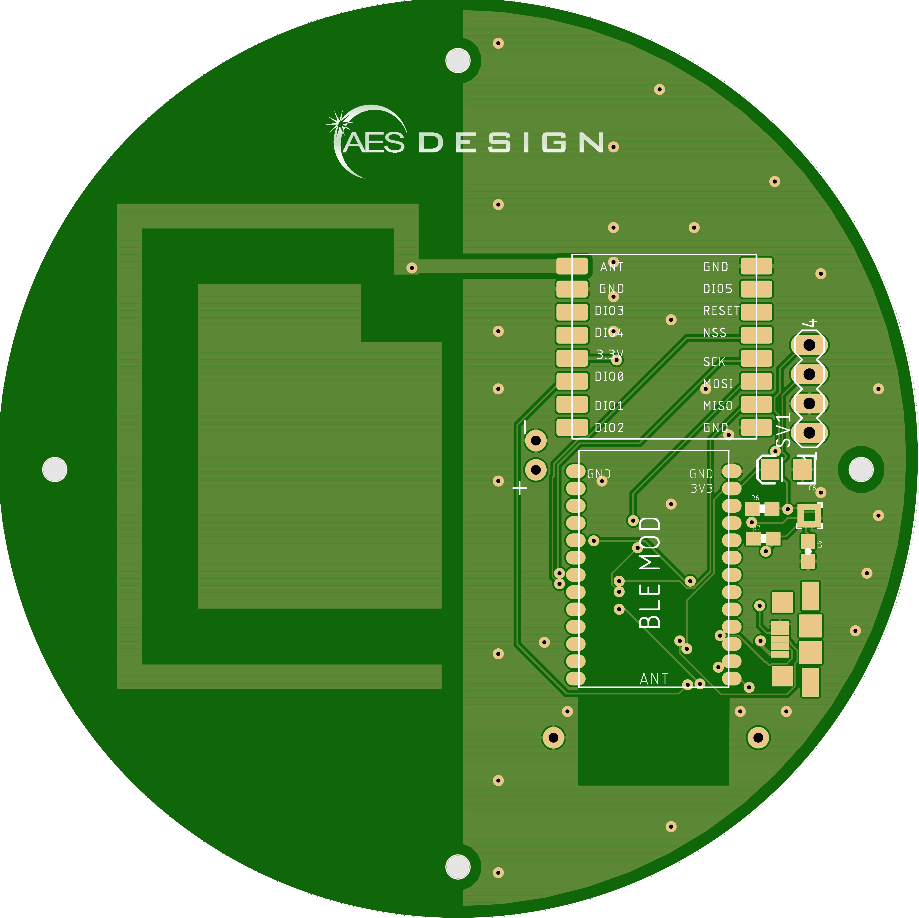
Antenna drawn on the board, circular form factor. Its own antenna rather than a module's — placement and ground plane are part of the design.
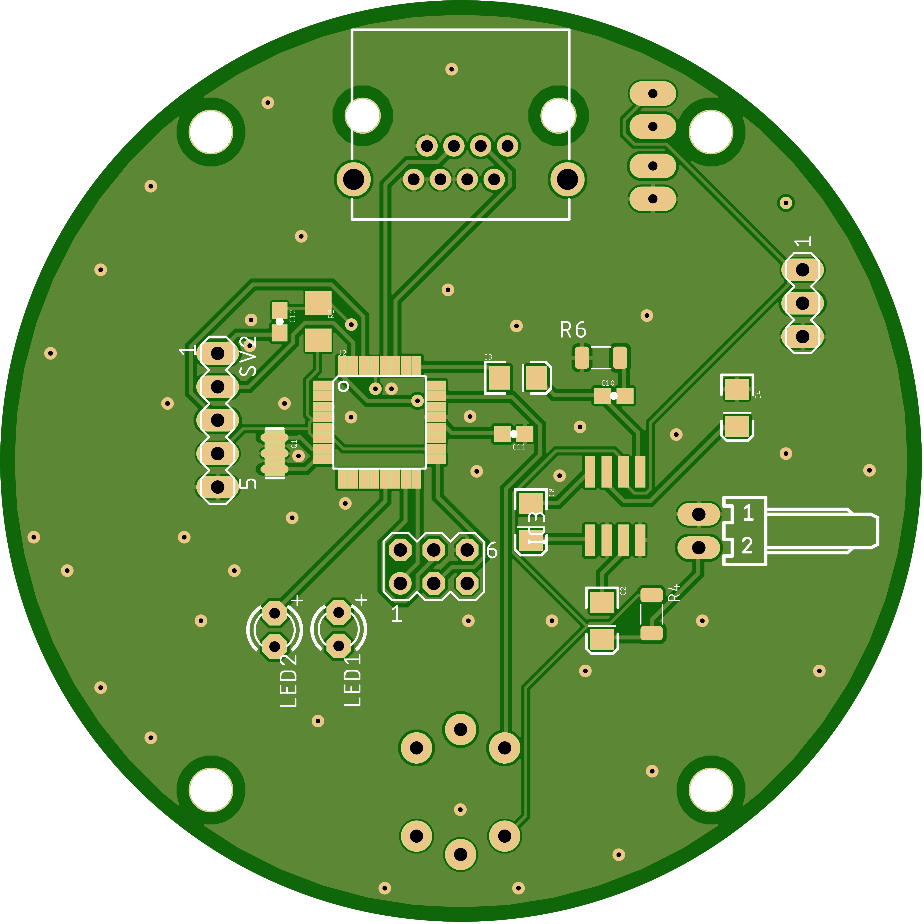
Form factor imposed by the enclosure; connector and mounting hole positions fixed by the mechanical design.
Cloud and back end
No fixed stack is imposed here. Most industrial clients already have infrastructure; the right move is to connect the device to it, not to migrate the client onto a new platform.
- If you have infrastructure — the device talks to your MQTT broker, your API or your SCADA system. Bridging to existing Modbus and CAN equipment falls in the same scope.
- If you do not — a plain stack of MQTT broker, time-series database and dashboard gets set up. It runs on your own server or the cloud you prefer; no proprietary platform that locks you in is recommended.
Not sure what to put in the field?
Radio and architecture are usually the most consequential decisions in the project and the most expensive to reverse. Describe the site — let us walk through which option fits and why.