
Embedded systems
The whole board — from schematic to production files, from the first line of code to field validation. Hardware and firmware are designed in the same place, so nothing falls into the gap between them.
Scope
Every step needed to take a board from idea to production is available. On any given project some of these may stay with you; who owns what is settled at the start.
Circuit design
Schematic, component selection, BOM. Availability is part of the selection — a part you cannot buy turns a working design into an unusable one.
PCB layout
Multilayer layout in KiCad. Power distribution, ground plane integrity, mechanical constraints and manufacturability are weighed together.
Firmware
Bare-metal or embedded Linux. Drivers, communication stack, power management and field update.
The hardware side
The design tool is KiCad. What follows is not a claim list — it is work actually done on finished boards.
- Multilayer layout — high component density inside tight mechanical envelopes.
- PCB antenna design — the antenna is drawn into the board copper rather than bought as a pre-certified module. Ground plane cutouts, feed point and keep-out area are part of the design.
- Power stages — 12 V field supply, USB, LiPo charging and management, source selection.
- Field I/O — relay outputs, opto-isolated inputs, fused distribution, switch and panel connections.
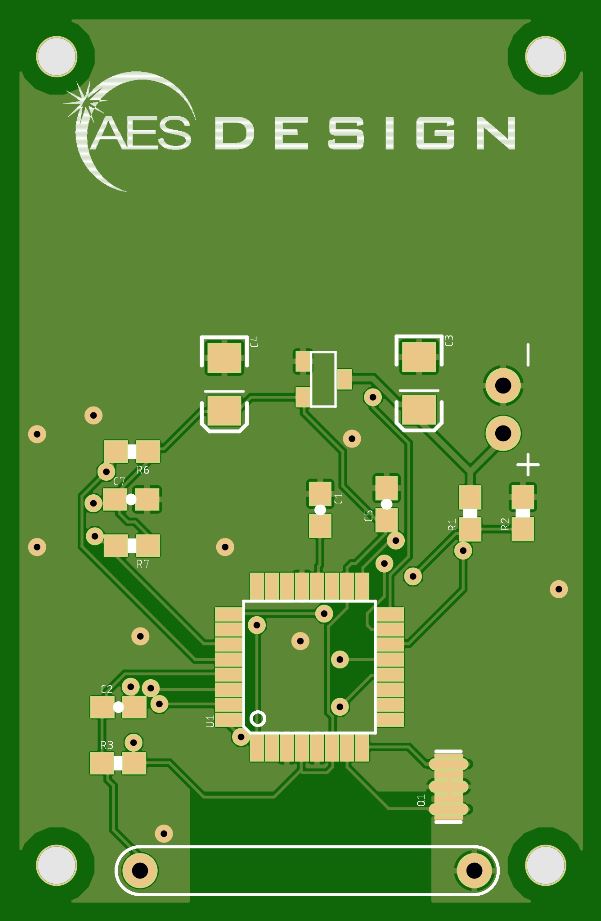
A design where the mechanical envelope set the board area.
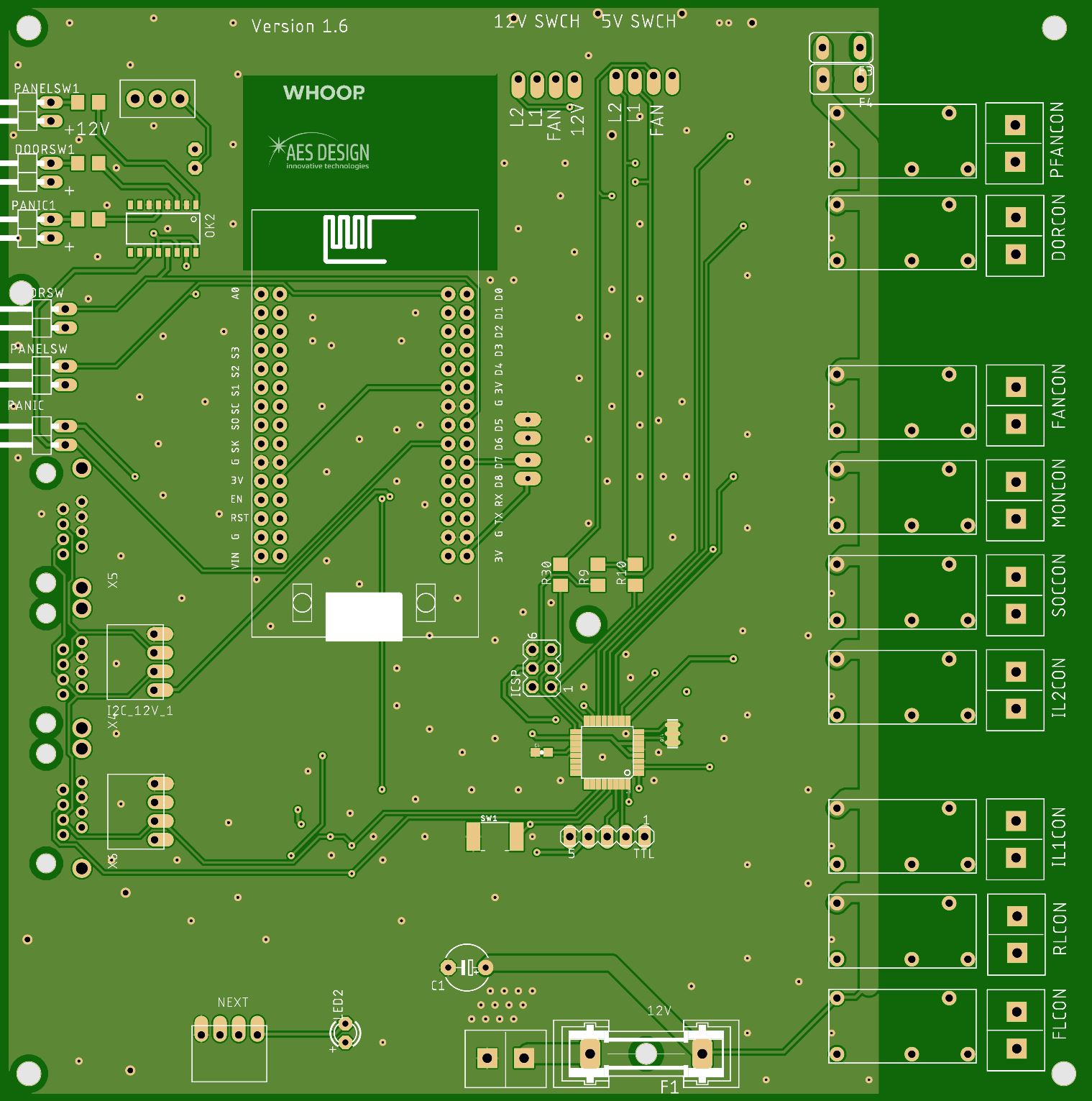
Eight relays, panel and door switch inputs, fused 12 V distribution.
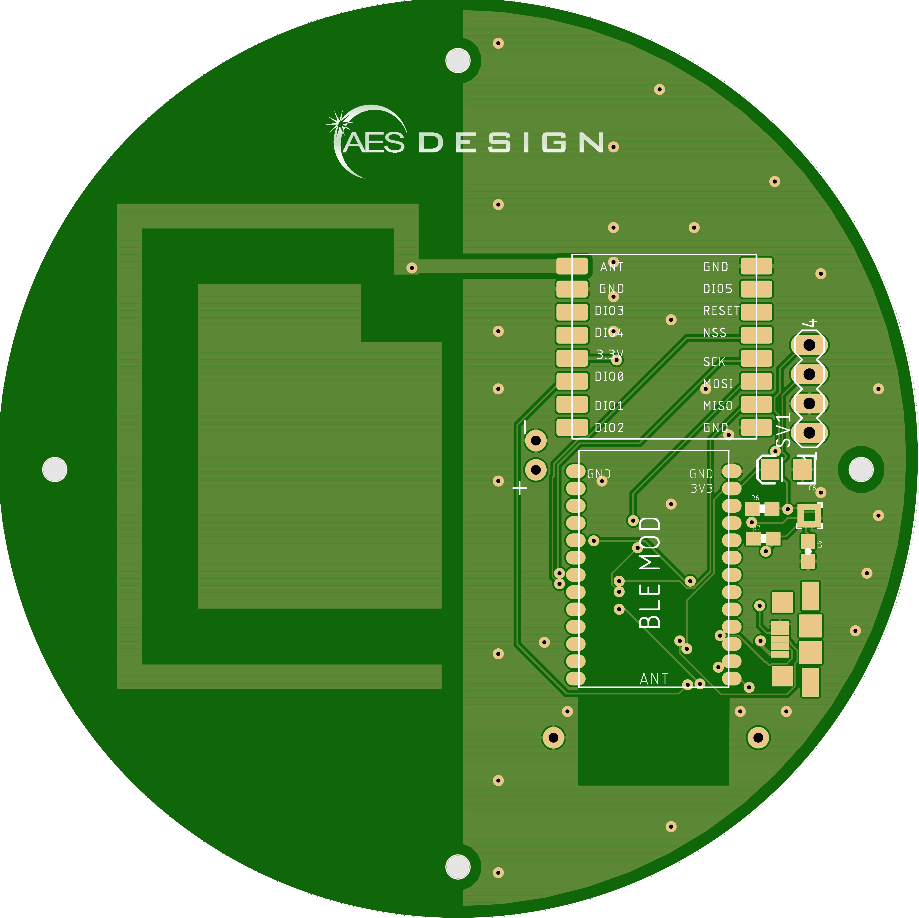
Antenna drawn on the board; RF placement part of the design.
Bare-metal or embedded Linux?
This is decided early and is expensive to reverse later. It is not a matter of taste — the requirements decide it.
| Requirement | Direction | Why |
|---|---|---|
| Microsecond-level timing | Bare-metal | No operating system in the way; latency is predictable and measurable. |
| Months of battery life | Bare-metal | Sleep modes and wake sources are controlled directly; idle draw can be pushed into microamps. |
| Single task, limited I/O | Bare-metal | The complexity an OS brings does not pay for itself. |
| TCP/IP, TLS, file system | Embedded Linux | Writing and maintaining these stacks from scratch is costly and risky. |
| Camera, display, USB devices | Embedded Linux | The driver ecosystem already exists; the same work bare-metal takes months. |
| Several independent services | Embedded Linux | Process isolation and a real scheduler beat a hand-written loop. |
Designs that use both are common: a microcontroller handling the real-time work alongside a Linux processor carrying the network and the interface. In that case the protocol between the two is the part of the design that deserves the most care.
Test and compliance
There is experience with EMC/CE processes. What is done and what stays with you are separated explicitly — being clear about that line from the start is the single biggest factor in a certification schedule not slipping.
Done here
Designing with EMC requirements in mind; filtering, shielding and grounding measures built into the board. Revision based on pre-test findings. The design documentation needed for the technical file.
Stays with you
Formal measurements at an accredited laboratory, the declaration of conformity and legal responsibility for CE marking. These are the manufacturer's obligations and cannot be transferred.
Have a board that needs designing?
You do not need a complete requirements list. Write down what it has to do and the mechanical and cost constraints it has to live within — let us start with a feasibility conversation.