
Hardware that works in the field, from sensor to cloud.
AES Technologies designs hardware and firmware on STM32, ESP32 and embedded Linux. Schematic to PCB layout, first prototype to production handover — one place, one chain of responsibility.
Two disciplines, one chain of responsibility
When hardware and firmware sit with separate teams, problems fall into the gap between them. When the board and the code come from the same place, that gap disappears.
Embedded systems
Schematic, PCB layout, prototyping and firmware. Bare-metal or embedded Linux — which one is right depends on the project, and both are on the table. Preparation for EMC/CE included.
Embedded systems →IoT systems
The whole chain from sensor to cloud: radio choice, power budget, gateway, data path and interface. The call between BLE, LoRa, cellular and Wi-Fi is made by what the site actually demands.
IoT systems →Some of the boards designed here
These are layout views of real designs. Client names are omitted except where permission was given.
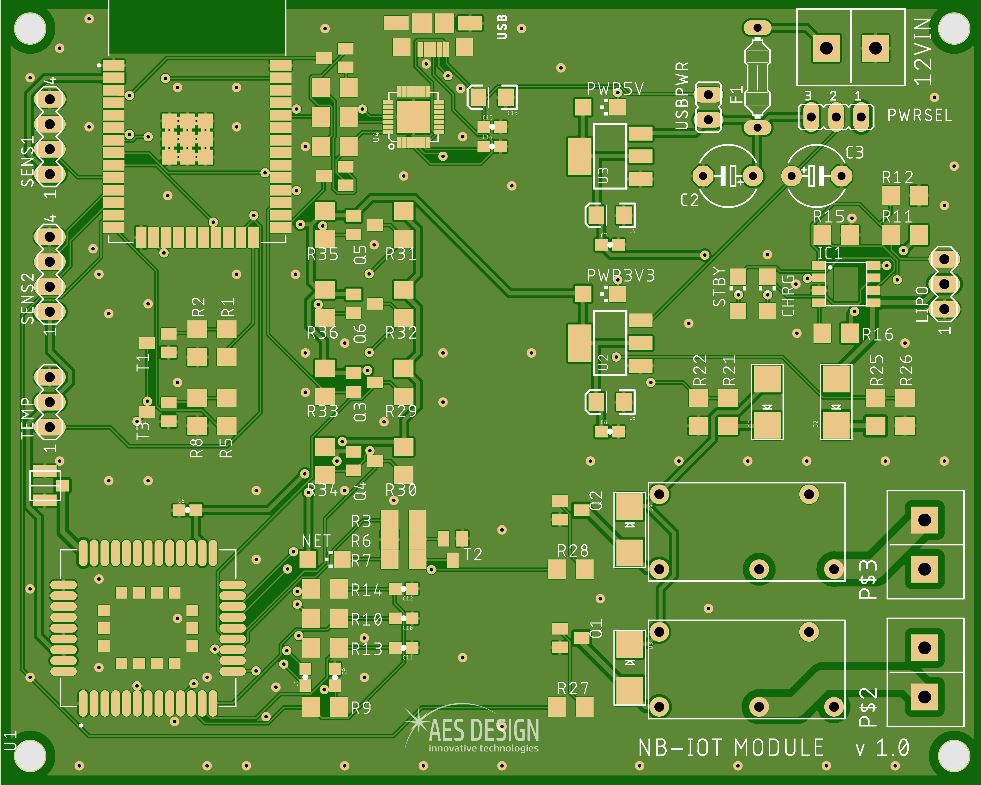
Cellular IoT endpoint. Two sensor inputs, temperature input, LiPo charging stage, 12 V supply and two relay outputs.
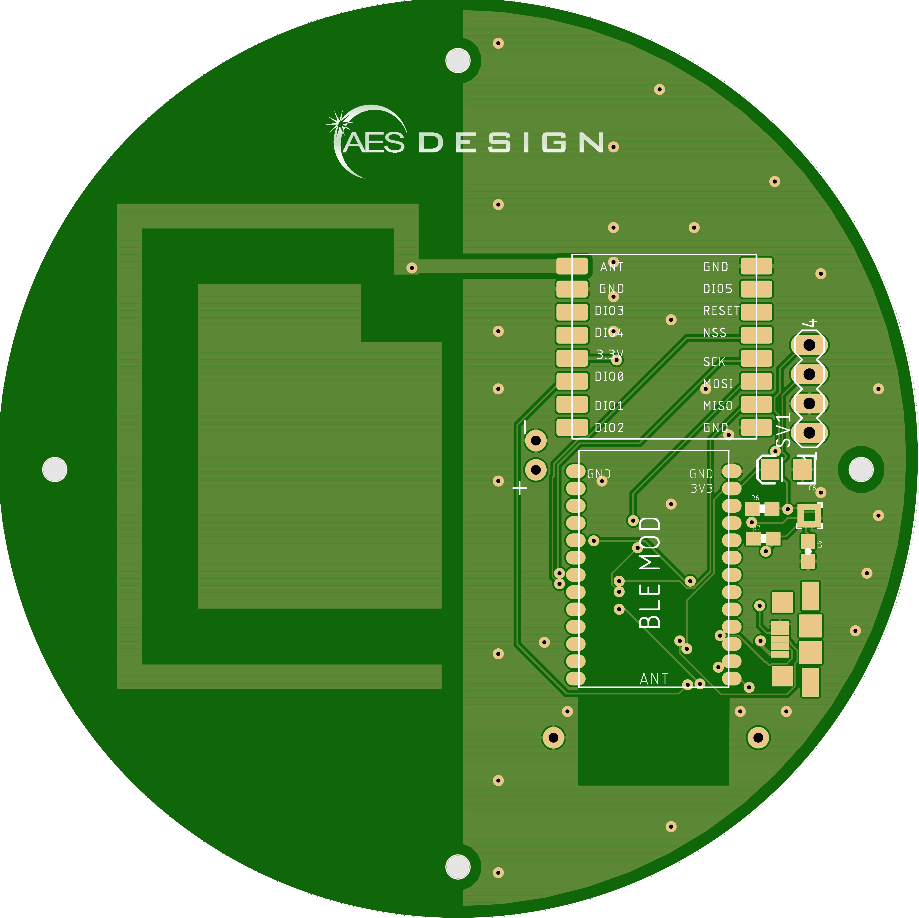
The antenna is drawn on the board — not a pre-certified module antenna. RF placement and ground plane cutouts are part of the design.
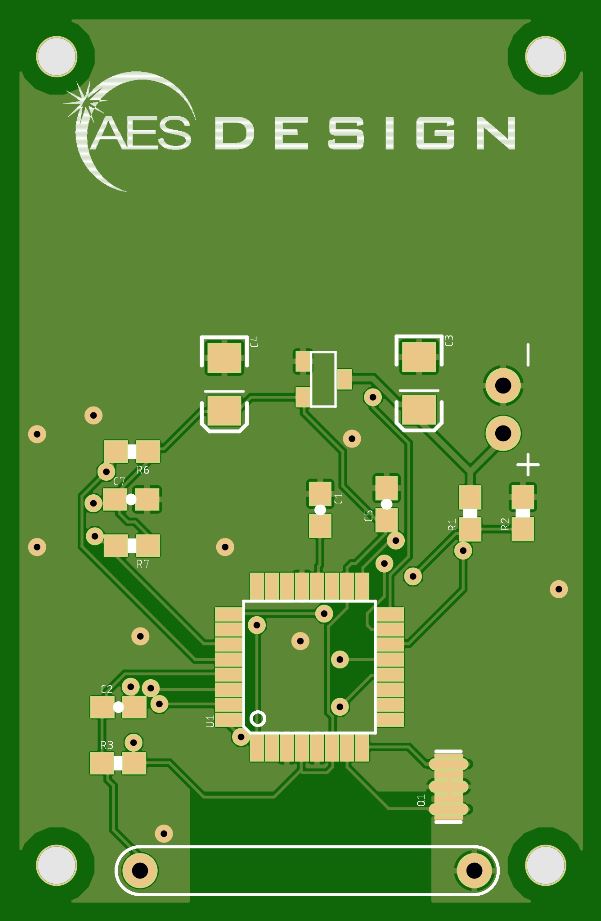
QFN controller, tight placement. One of those designs where the mechanical envelope dictates the board area.
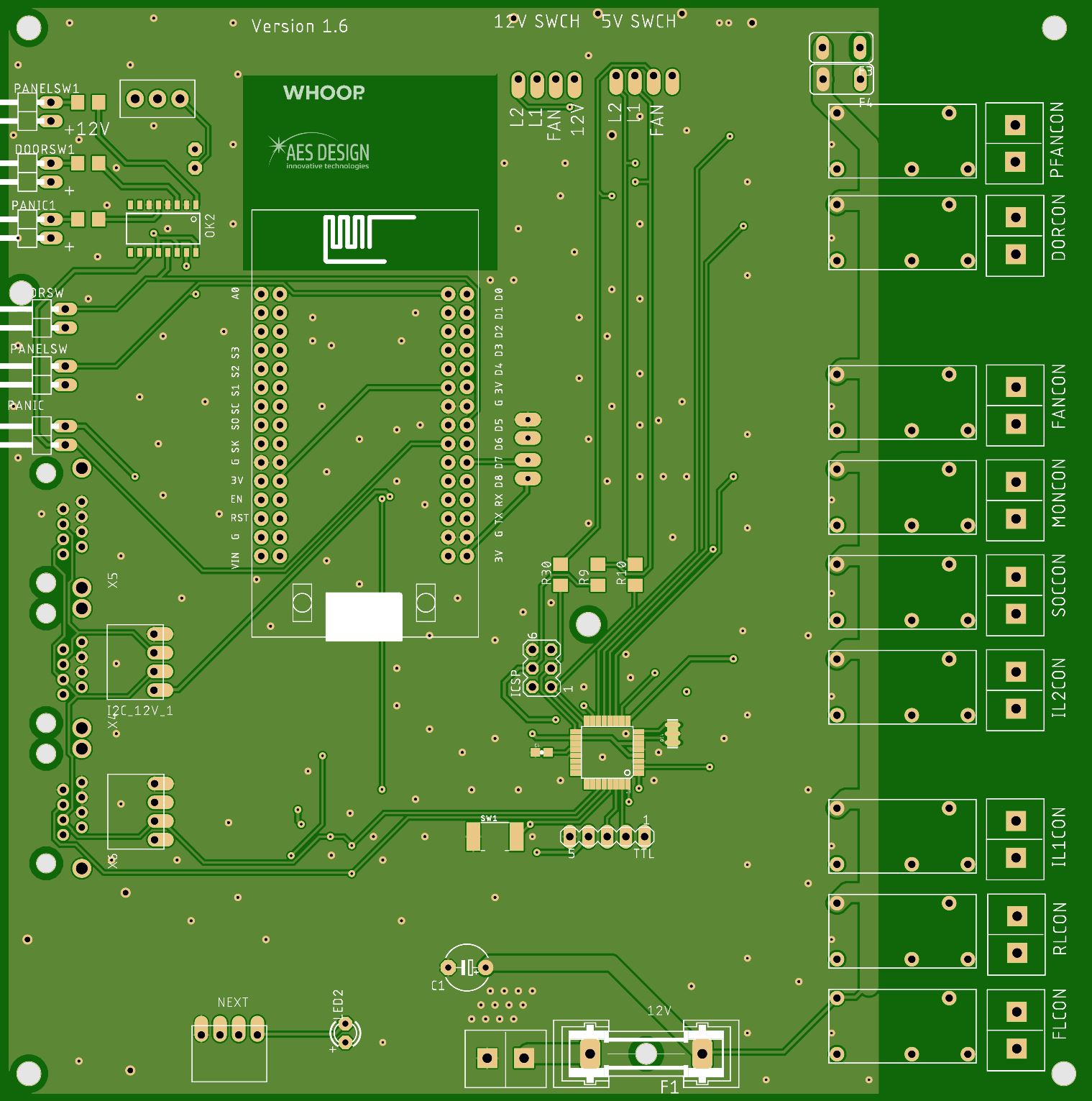
ESP module, eight relay outputs, panel and door switch inputs, fused 12 V distribution. A control board dense with field I/O.
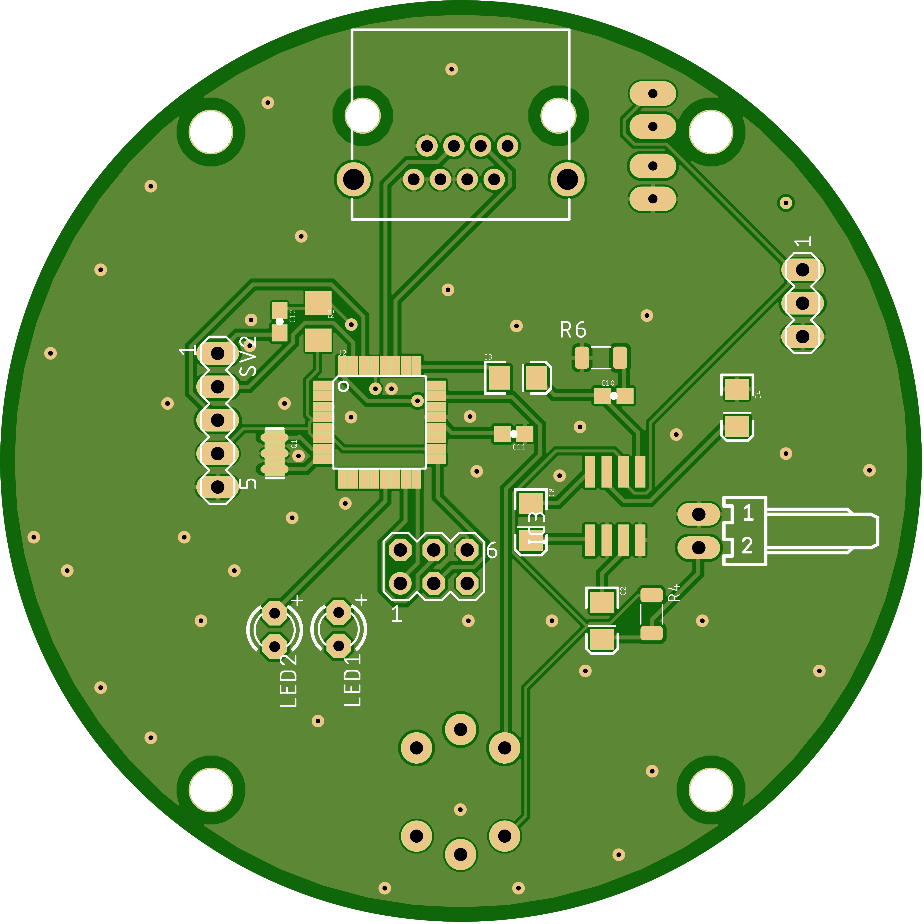
A circular form factor imposed by the enclosure. Connector and mounting hole positions fixed by the mechanical design.
Technology
There is real project experience behind every item listed here. If something you need is missing from the list, you will be told so plainly.
- Processors
- STM32, ESP32, Raspberry Pi
- Software
- Bare-metal firmware, embedded Linux
- Radio and buses
- BLE, Wi-Fi, LoRa, cellular; Modbus, CAN, MQTT
- Hardware design
- KiCad — schematic, multilayer PCB layout, PCB antenna
- Test and compliance
- Experience with EMC/CE processes
- Cloud side
- Built around your existing infrastructure; no fixed stack imposed
How a project moves
Every phase has a concrete deliverable. You see what you are getting before the next one starts.
Discovery
The need, the constraints and the target cost are discussed. Output: a scope note and the open questions that still need answers.
Feasibility
Technical approach, risk list and estimate. If something cannot be done, you hear it here — not after design has started.
Design and prototype
Schematic, BOM, PCB layout and a first working board. Core firmware functions arrive with the prototype.
Validation and handover
Test results, EMC/CE preparation notes, production files, source code and documentation.
Tell me about your project
You do not need a finished requirements document. Write what you want to build, under which constraints and by when — the rest gets worked out together.